
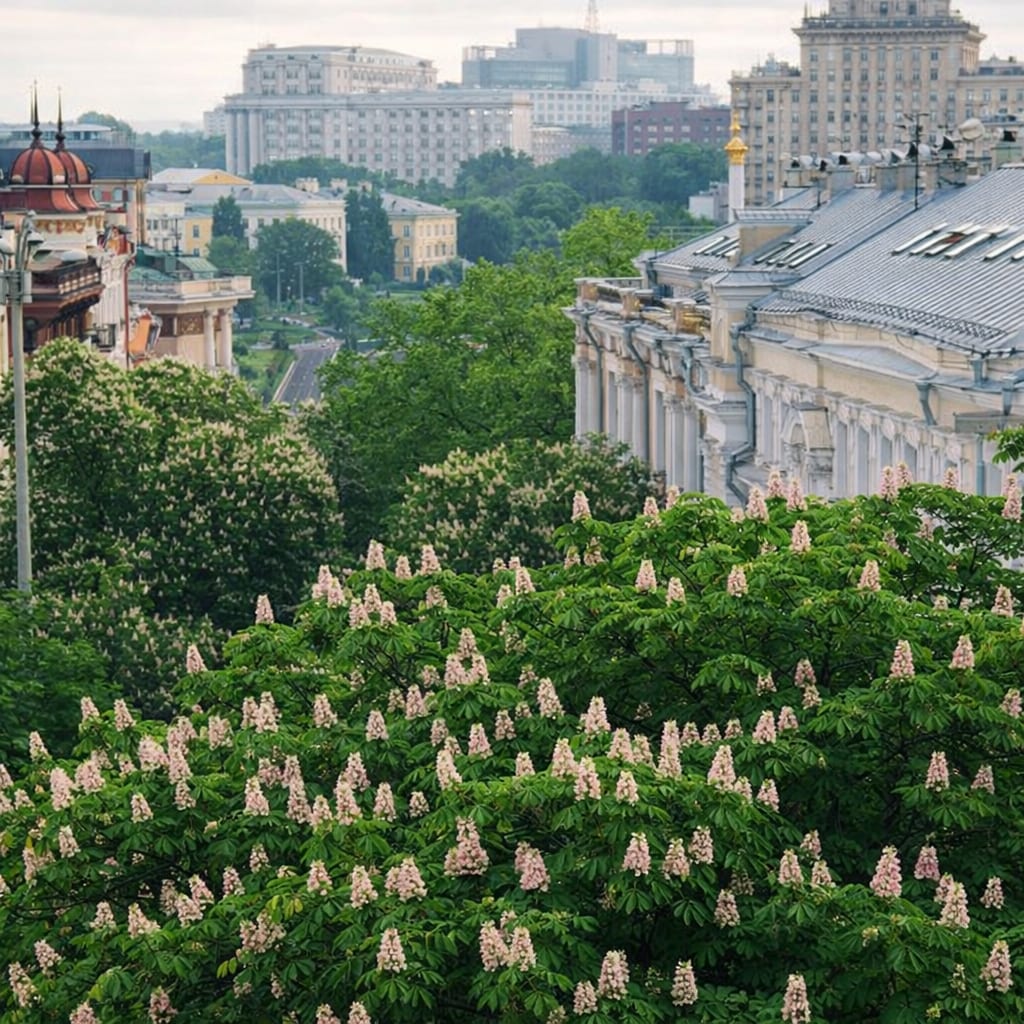
Last night — another alert. Somewhere after 2am, a wave of Shaheds passed over the city. The bark of air defence. A few explosions in the suburbs. Then silence.
By 7am there was a queue outside the café on Khreshchatyk.
This is Kyiv. And you have to see it to understand it.
What a typical Kyiv night looks like
An air alarm in Kyiv is not an exception. It is a schedule — a night schedule.
Here is roughly what a mass attack looks like:
- 22:00–23:00 — the alert sounds. The Air Alarm app vibrates on the nightstand.
- 1:00–3:00 — the peak. Shaheds come in waves. Air defence fires. The city doesn’t sleep — some are in shelters, some in bathrooms, some lying still and waiting.
- 4:30–5:00 — all clear. The city exhales.
- 7:00 — coffee.
The Iranian-designed Shahed-136 (Russia calls them Geran-2) is, in essence, a flying kamikaze bomb. Slow, loud, relatively cheap. Russia launches them in hundreds per night, trying to saturate the air defence network. But Kyiv has learned to live with this.
When you hear the characteristic sound — somewhere between a lawnmower and a moped — you already know what to do. It has become part of daily life. An unpleasant part. But daily life.
In the morning, Kyiv smells of coffee
This is not a poetic metaphor. It is literally what you feel when you step outside after a sleepless night.
Kyiv’s cafés open at seven. Some earlier. Queues form before staff have finished setting out the chairs.
This is the paradox the news doesn’t cover. The city that takes ballistic missile strikes at night operates on a completely ordinary rhythm by morning — coffee, a croissant, a laptop call, a child with a school bag. The contrast is jarring the first time. Then it starts to make sense.
Stopping means losing. Kyiv has understood this better than anyone.
Cafés and restaurants that learned to survive
One of the most unexpected things visitors to Kyiv during wartime discover: the food is remarkable.
This is not accidental. Kyiv’s hospitality industry has undergone brutal evolution over four years of full-scale war:
Generators are now standard equipment. When Russia bombs the energy grid and the city loses power, establishments switch to autonomous power within seconds.
Water reserves — restaurants adapted to work through water supply disruptions. Reserve tanks, new kitchen procedures, modified menus where necessary.
Staff — the people who stayed, stayed by choice. They are not clocking in. They are invested. That shows in everything from the coffee to the service.
The result: Kyiv cafés and restaurants serve food at a level that most “peaceful” tourist cities in Europe don’t match. Every visitor who has been here says the same thing. It is not marketing — it is a consistent, documented fact.
The other war, fought over the grid
The drones aimed at apartment blocks get the coverage. The campaign that has shaped daily life here more than any other is the one aimed at electricity.
From the autumn of 2022, Russia began striking power generation and distribution on a schedule timed to the cold. The intent was never military. It was to make a northern city unheatable and unlit through a winter, and to see whether a population would rather capitulate than freeze.
What it produced instead was the most visible piece of civilian adaptation in the country.
Generators appeared on every pavement, outside shops, pharmacies, barbers and cafés, running on petrol with cables taped across the footpath. Their noise and their smell were the defining street atmosphere of that first winter.
Schedules became a fact of life. Power came in blocks, published in advance by the distributor, and everybody learned their own queue number: cook now, do the laundry now, charge everything now, because the window closes at six.
Heated public points opened in schools, libraries and tents, with power, warmth, hot tea and a socket, for anyone whose building had none of it.
The hospitality trade rewired itself, which is the direct reason a café can serve you a flat white the morning after a strike. The generator was bought before you arrived, by someone who assumed this would last years and was right.
A visitor today will mostly see the result rather than the disruption, and may well notice nothing at all. It is worth knowing what the quiet cost, and that the lights being on is an achievement rather than a default.
Why resilience is not an abstraction
The word “resilience” has become a cliché. Media have overused it to the point where it has almost lost meaning.
But when you see it directly — the word recovers its weight.
Resilience is the café owner who opened the morning after a rocket hit the building two blocks away. Not because “the business requires it” — because closing would mean giving Russia what it wants.
Resilience is the restaurateur who installed a generator in the summer of 2022, when nobody believed the infrastructure attacks would be this sustained.
Resilience is the queue for coffee at 7am after a night without sleep.
This is not cinematic heroism. It is a daily choice made by millions of people — to keep going.
Is it safe to come to Kyiv?
The most common question I get. And I answer honestly:
Yes. With caveats — but yes.
Kyiv is protected by one of the most advanced integrated air defence networks in the world: Ukrainian systems, US-supplied Patriots, German IRIS-T units, and others working in combination. The city operates normally — transport, museums, restaurants, shops, all open.
Night attacks are real. But they are a reality the city has adapted to completely. Air defence intercepts the large majority of incoming threats. When you visit, you will likely hear alarms. You will very likely not witness a single explosion.
The risk profile is manageable and well below what the news coverage implies. Your guide lives here. We would not operate otherwise.
What is worth seeing for yourself
If you are considering a trip to Kyiv, here is what is genuinely worth your time:
- The coffee — in any independent café in Podil or the Passage. Not the chains.
- The borscht — the kind made for regulars. It exists.
- The streets of Irpin and Bucha — to understand what actually happened in February–March 2022, not from headlines.
- The Cold War nuclear bunker — a real decommissioned Soviet missile base about 300 km south of Kyiv, which makes it a full day, and it is open on Sundays.
- A conversation with a guide who was here from the first hours — and is still here now.
This is what private guided tours of Kyiv with Capital Tours Kyiv are built around.
Conclusion: Kyiv does not wait for peace to live
The Shaheds will come again. Possibly tonight.
And tomorrow morning the cafés will open. The espresso will be made. People will go to work.
That is resilience — not a heroic pose, but a decision made every morning, despite everything.
If you want to understand this — not from news feeds, not from social media — come and see it yourself. We will show you.